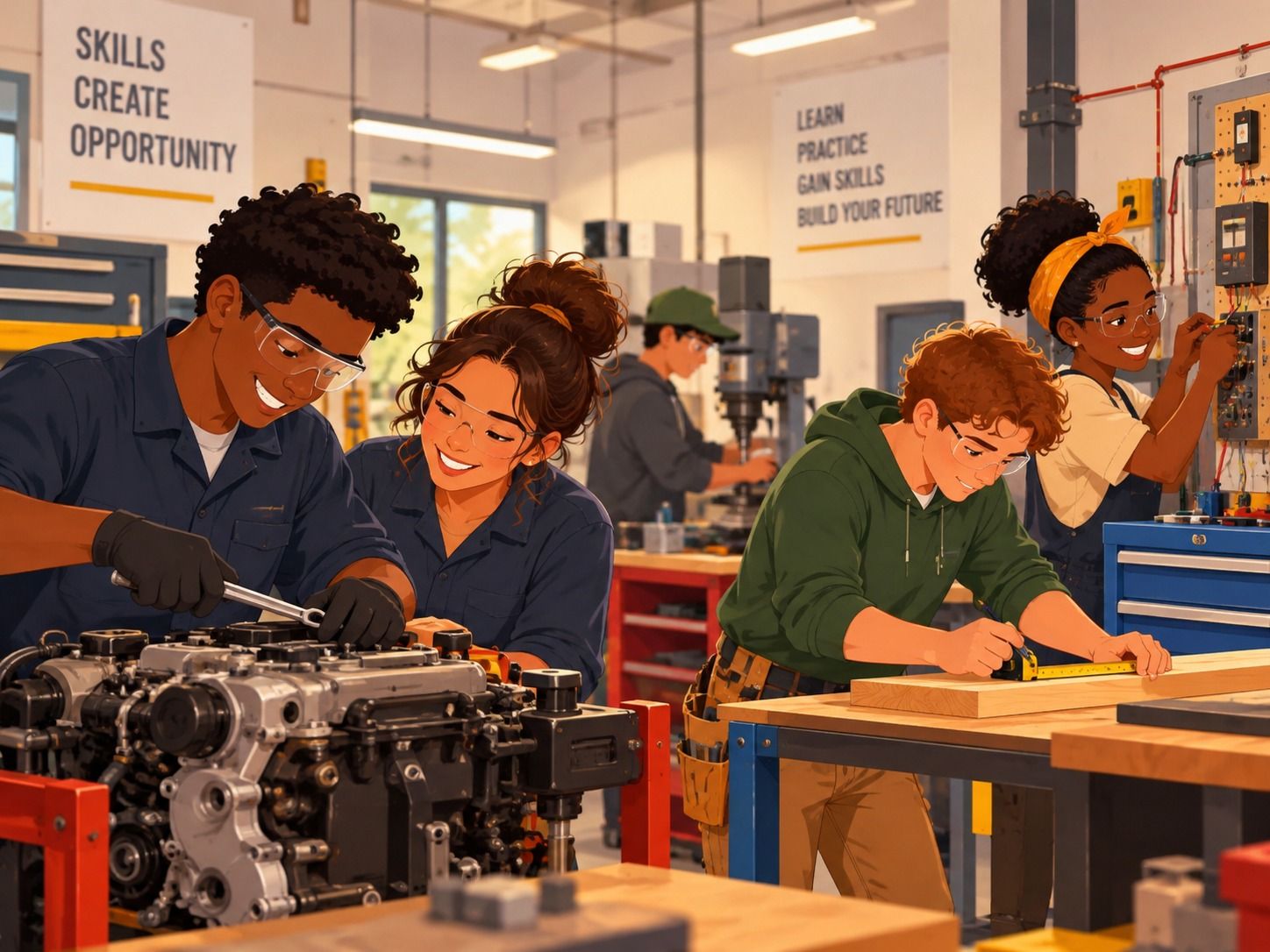
Our goal is to help residents connect with vocational schools, workforce programs, and employers offering hands-on training, apprenticeships, and opportunities to earn industry-recognized credentials. Potential training pathways include HVAC, healthcare, commercial driving, construction, forklift operator and other skilled trades.
What does vocational training involve?
Our goal is to connect residents with short-term training programs, vocational education, and hands-on learning opportunities that can lead to valuable career credentials and meaningful employment. We also help you pursue trade certifications and GED completion.
- Vocational & Skilled Trades Training: Access to short-term programs in HVAC, construction, healthcare, commercial driving, and other career fields.
- Certifications & Credentials: Guidance toward industry-recognized certifications, licenses, and qualifications that open doors to employment.
- Paid Training & Apprenticeships: Exploring opportunities to earn income while gaining practical experience and developing marketable skills.
How does training fit into my own goals?
Success looks different for everyone. We help residents discover their strengths and pursue paths that fit them, whether through hands-on training, apprenticeships, work experience, or education.
What happens once I've learned a trade?
Completing training is just the beginning. We help residents turn their skills into meaningful employment through resume support, interview preparation, job-search assistance, and employer connections.
Vocational Training, in general
General information, not specific to Abraham’s house foundation.
Vocational training offers a practical, hands-on approach to learning valuable skills that can lead directly to employment. Through trade programs, apprenticeships, and on-the-job training, individuals can gain real-world experience and pursue industry-recognized credentials. These pathways offer opportunities to earn a living, develop expertise, and build long-term career stability
Many trades have their own credentials, and earning one can show employers that a person has learned the basics of the work.